Ever wonder if running a long Ethernet cable means compromising on speed or reliability? You’re not alone! Many of us face the challenge of connecting devices across longer distances in our homes or offices, and a 100-foot Ethernet cable often feels like the sweet spot. But with so many options out there, from Cat5e to Cat8, choosing the right one and ensuring optimal performance can feel like navigating a maze. As your trusted experts at SDCMT, we’re here to cut through the confusion and help you get the most out of your network, even with those longer runs.
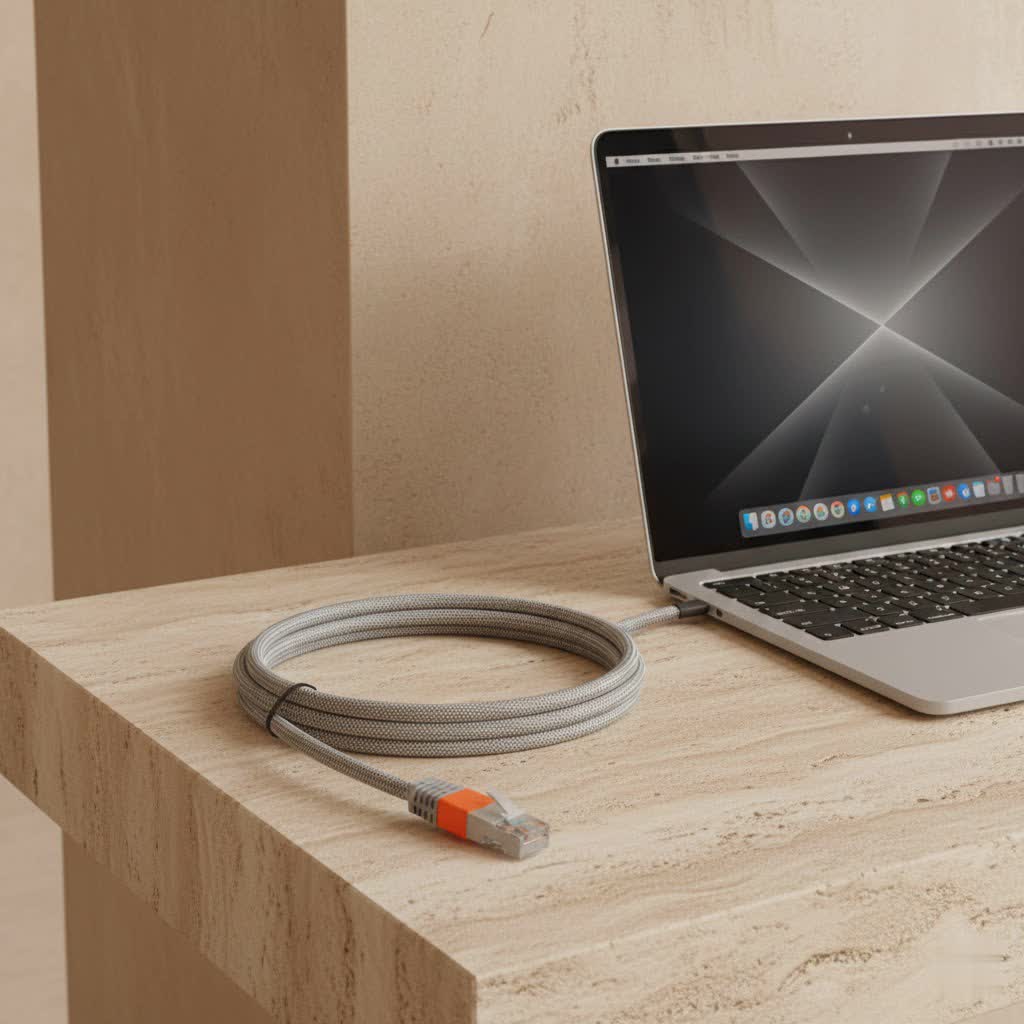
Dispelling the Myth: Does Length Equal Lag?
|
Our Picks for the Best Ethernet Cable in 2026
As an Amazon Associate I earn from qualifying purchases.
|
||
| Num | Product | Action |
|---|---|---|
| 1 | Cat 8 Ethernet Cable 50 ft, 6ft 10ft 20ft 30ft 40ft 75ft 100ft 150ft Heavy Duty High Speed Internet Network Cable 26AWG 40Gbps 2000Mhz,Professional LAN Cable Shielded in Wall,Indoor&Outdoor |

|
| 2 | Amazon Basics RJ45 Cat 6 Ethernet Patch Cable, 10Gpbs High-Speed Cable, 250MHz, Snagless, 10 Foot, Black for Printer |
|
| 3 | Snowkids Cat 8 Ethernet Cable 15 FT, Strong Signal, High Speed 40Gbps 2000Mhz, Network Cord with RJ45 Internet Connector for TV/Printer/Computer/Modem/Router/ps-3/4/5, Braided Flat LAN Cable 15FT Grey |
|
| 4 | Vabogu Cat 8 Ethernet Cable, Heavy Duty High Speed Internet Network Cable, Multiple Size Options, 26AWG, 2000MHz 40Gbps with Gold Plated RJ45 Connectors, Shielded for Indoor & Outdoor Use, 6FT |
|
| 5 | UGREEN Cat 8 Ethernet Cable 10FT, High Speed Braided 40Gbps 2000Mhz Network Cord Cat8 RJ45 Shielded Indoor Heavy Duty LAN Cables Compatible for Gaming PC PS5 Xbox Modem Router 10FT |
|
| 6 | Amazon Basics RJ45 Cat-6 Ethernet Patch Cable, 1Gpbs Transfer Speed, Gold-Plated Connectors, 50 Foot for PC, TV, Tablet, Router, Printer, Black |
|
| 7 | Amazon Basics Cat 6 Ethernet RJ45 10Gbps Flat Cable 100 ft Outdoor&Indoor White Solid Patch Cord with Clips for Router, Modem, PS4/5, Xbox, Gaming, Computer Network for High Speed LAN Internet |
|
| 8 | Amazon Basics 5-Pack RJ45 Cat 6 Ethernet Patch Cable, 10Gpbs High-Speed Cable, Gold-Plated, Snagless, 5 Foot, Multicolor |
|
| 9 | UGREEN Cat 8 Ethernet Cable 6FT, High Speed Braided 40Gbps 2000Mhz Network Cord Cat8 RJ45 Shielded Indoor Heavy Duty LAN Cables Compatible for Gaming PC PS5 Xbox Modem Router 6FT |
|
| 10 | Jadaol Cat 6 Ethernet Cable 50 ft, 10Gbps Support Cat8 Cat7 Network, Flat RJ45 LAN Patch Cable, High-Speed Wired Internet Cable for Router, Modem, Switch, Gaming Consoles, PC, Streaming Devices, White |
|
Let’s tackle the biggest concern right off the bat: will a 100-foot Ethernet cable slow down your internet speed or increase latency? The short answer, for the vast majority of users, is a resounding no. Modern Ethernet standards are incredibly robust, designed to maintain optimal performance for distances up to 100 meters (approximately 328 feet). So, a 100-foot cable is well within the sweet spot for delivering consistent, high-speed data without a noticeable drop-off.
“For a 100-foot run, don’t just pick any cable off the shelf,” advises Sarah Davies, Lead Network Engineer at SDCMT. “Understanding the subtle differences in cable categories and proper installation can mean the difference between a good connection and a truly great one.” The impact on latency, especially for gamers, is negligible—we’re talking nanoseconds, which the human brain simply won’t perceive.
Understanding Your Options: Ethernet Cable Categories for 100 Feet
When you’re looking for a 100-foot Ethernet cable, you’ll encounter several “Category” (Cat) ratings. These categories define the cable’s performance capabilities in terms of speed and bandwidth. Here’s a quick rundown of how each performs over a 100-foot (approx. 30.5-meter) length:
| Cable Type | Max Speed at 100 ft (approx. 30.5m) | Max Bandwidth | Typical Use Case at 100 ft |
|---|---|---|---|
| Cat5e | 1 Gigabit per second (Gbps) | 100 MHz | Standard home/office, basic gaming |
| Cat6 | 1 Gbps; up to 10 Gbps (shorter distances) | 250 MHz | Home/office, HD streaming, online gaming |
| Cat6a | 10 Gbps | 500 MHz | Enterprise, professional gaming, future-proofing |
| Cat7 | 10 Gbps | 600 MHz | High-interference environments, data centers |
| Cat8 | 10 Gbps (up to 40 Gbps for shorter runs) | 2000 MHz | High-demand data centers, specialized applications |
Cat5e: The Reliable Workhorse
Even though it’s been around for a while, a good quality Cat5e cable will comfortably deliver 1 Gbps over 100 feet. It’s perfect for most everyday tasks like browsing, streaming standard HD content, and general office work. If you’re on a budget and your internet speed is 1 Gbps or less, Cat5e is a solid, economical choice.
Cat6: A Step Up for Enhanced Performance
Cat6 cables offer better performance, supporting 1 Gbps over 100 feet with increased bandwidth. While technically capable of 10 Gbps, that speed is typically limited to shorter runs (around 55 meters or 180 feet). For a 100-foot run, Cat6 provides excellent stability and is a great choice for HD video streaming, more intense online gaming, and larger file transfers. It also offers better crosstalk prevention than Cat5e.
Cat6a: The Future-Proof Solution for 10 Gigabit
If you’re aiming for 10 Gigabit Ethernet over the entire 100-foot distance, Cat6a is your go-to. This augmented category is specifically designed to support 10 Gbps reliably over the full 100 meters, making it ideal for future-proofing your network, demanding home office setups, and enterprise environments. It significantly reduces interference and provides higher bandwidth.
Cat7: Shielded for Superior Signal Integrity
Cat7 cables introduce more extensive shielding for each twisted pair, drastically reducing electromagnetic interference (EMI) and crosstalk. While it also supports 10 Gbps over 100 meters, its primary benefit lies in its robust shielding and higher frequency (600 MHz), making it suitable for professional server rooms or environments with significant electrical noise.
Cat8: The High-Bandwidth Powerhouse (Often Overkill for 100 Feet)
Cat8 represents the pinnacle of copper Ethernet cabling, offering up to 25 or 40 Gbps, though these speeds are typically achieved over much shorter distances (up to 30 meters or 98.5 feet). For a 100-foot run, Cat8 will still deliver 10 Gbps but with an impressive 2000 MHz frequency. While excellent for data centers and high-speed switch-to-switch communication, it’s generally overkill and more expensive for typical home or small office 100-foot applications unless you have extremely specific, future-forward needs.
Choosing the Right 100-Foot Ethernet Cable for Your Needs
Deciding on the best 100-foot Ethernet cable boils down to your specific use case, current internet speed, and future aspirations.
- For Everyday Home Use & Casual Gaming: If your internet plan is 1 Gbps or less, a Cat5e or Cat6 cable will serve you perfectly over 100 feet. They are cost-effective and provide more than enough speed.
- For Serious Gaming & High-Bandwidth Streaming: A Cat6 cable offers a great balance of performance and price for these applications. If you want to future-proof for potential 10 Gbps internet speeds or have a very demanding local network, Cat6a is an excellent investment.
- For Professional & Enterprise Environments: Cat6a is highly recommended for reliable 10 Gbps performance over 100 feet. If your environment is prone to electrical interference, Cat7 with its superior shielding can offer added peace of mind. Cat8 might be considered for specialized high-speed backbone connections if future 25/40Gbps upgrades are planned for shorter segments.
Solid vs. Stranded: What’s the Difference for a Long Run?
When selecting your 100-foot Ethernet cable, you’ll also encounter terms like “solid” and “stranded” conductors.
- Solid Core Cables use a single, solid piece of copper wire for each conductor. They are more rigid, making them ideal for in-wall installations or runs where the cable won’t be moved frequently. They offer better performance over longer distances.
- Stranded Core Cables use multiple thinner strands of copper twisted together for each conductor. These are more flexible and durable against bending, making them perfect for patch cables that connect devices to wall jacks or for situations where the cable needs to be moved often. For a permanent 100-foot run, solid core is generally preferred.
Shielding Matters: Protecting Your Signal over 100 Feet
In some environments, electromagnetic interference (EMI) from other electronics, power lines, or machinery can degrade your network signal. This is where shielding comes in.
- UTP (Unshielded Twisted Pair): Most common and sufficient for homes and typical offices where EMI is not a major concern. Cat5e and Cat6 are often UTP.
- STP/FTP (Shielded/Foiled Twisted Pair): These cables incorporate shielding (foil or braid) around individual wire pairs or the entire cable bundle. They are more resistant to EMI and crosstalk, making them a wise choice for industrial settings, areas near heavy machinery, or when running cables alongside electrical wiring, even for a 100-foot run. Cat6a, Cat7, and Cat8 often feature shielding.
Installation Best Practices for Your 100-Foot Ethernet Cable
Proper installation is just as critical as choosing the right cable. Even the best 100-foot Ethernet cable can underperform if mishandled.
- Plan Your Route Carefully: Before you even unroll the cable, map out the path. Look for the most direct route that avoids major sources of interference (e.g., fluorescent lights, power cables, microwaves) and sharp bends.
- Avoid Kinks and Sharp Bends: Ethernet cables are designed with twisted pairs, and kinking or bending them too sharply can compromise the integrity of these twists, leading to signal degradation. Aim for gentle curves, especially around corners. The minimum bend radius is typically four times the cable’s diameter.
- Secure the Cable Properly: Use cable clips, ties, or conduits to secure your 100-foot Ethernet cable. This not only keeps your setup tidy but also prevents accidental damage from people tripping or furniture crushing the cable. Don’t pull cable ties too tight, as this can also compress the cable and affect performance.
- Terminate Correctly: If you’re installing a bulk cable and adding connectors yourself, ensure proper termination (T568A or T568B standard). Faulty terminations are a common cause of network issues.
- Test Your Connection: After installation, always test your network speed and connectivity. A simple online speed test or a network diagnostic tool can confirm everything is working as expected.
Troubleshooting Common Issues with Longer Ethernet Runs
Even with the best planning, sometimes issues arise. Here’s how to troubleshoot your 100-foot Ethernet cable:
- Inspect for Physical Damage: Visually check the entire length of the cable for any cuts, kinks, or severe pinches. Physical damage is a frequent culprit for performance problems.
- Check Connectors: Ensure that the RJ45 connectors on both ends are securely seated in their ports and that there are no bent or broken pins. A loose connection can cause intermittent network drops.
- Test with a Shorter Cable: If possible, temporarily connect your device with a known good, shorter Ethernet cable. If performance improves, the issue might indeed be with your 100-foot cable or its installation.
- Isolate Interference: If you suspect EMI, try rerouting the cable away from power sources or using shielded (STP/FTP) cables.
Maintaining Your Ethernet Cable for Longevity
A well-maintained 100-foot Ethernet cable can provide years of reliable service.
- Protect from Environmental Factors: If running outdoors or in harsh environments, use outdoor-rated, UV-resistant, and waterproof cables. For indoor runs, keep cables away from extreme heat sources.
- Avoid Physical Stress: Don’t roll heavy chairs over cables, pull them taut, or let them dangle in a way that puts strain on the connectors. Proper securing helps mitigate this.
- Keep it Clean: Dust and debris can accumulate in RJ45 ports. Periodically clean ports with compressed air to ensure good contact.
Frequently Asked Questions (FAQ)
Q: Will a 100-foot Ethernet cable make my internet slower than a shorter one?
A: No, for typical network speeds (up to 10 Gbps), a 100-foot Ethernet cable will not noticeably slow down your internet connection or increase latency, as it is well within the maximum recommended length of 100 meters (328 feet) for most cable categories.
Q: What is the best Cat cable type for a 100-foot run?
A: For most home and office users, Cat6 offers an excellent balance of performance and cost. If you need 10 Gbps speeds reliably over the entire 100 feet and want to future-proof your setup, Cat6a is the best choice.
Q: Can I use a 100-foot Ethernet cable for gaming without lag?
A: Absolutely! The latency introduced by a 100-foot Ethernet cable is so minimal (nanoseconds) that it is imperceptible to humans, ensuring a smooth and responsive gaming experience. Ethernet is almost always superior to Wi-Fi for gaming stability.
Q: Do I need a shielded 100-foot Ethernet cable?
A: You only need a shielded cable (STP/FTP) if your installation environment has significant electromagnetic interference (EMI) from other electronics, power lines, or machinery. For most homes and offices, an unshielded (UTP) cable is sufficient.
Q: What happens if my Ethernet cable is longer than 100 meters (328 feet)?
A: Exceeding 100 meters can lead to signal degradation, resulting in slower speeds, dropped connections, or even a complete loss of signal. For longer runs, you would typically need signal repeaters, switches, or fiber optic cabling.
Connect with Confidence Over 100 Feet
Navigating the world of Ethernet cables can seem daunting, but with the right knowledge, choosing and installing a 100-foot Ethernet cable is straightforward. Remember, the key is to match the cable to your needs, ensure quality, and follow best practices for installation and maintenance. By doing so, you’ll ensure your network runs smoothly, providing you with fast, reliable connectivity across every corner of your home or office.
Ready to optimize your network? Explore the high-quality Ethernet cable solutions and expert guides available on SDCMT.com today! We’re here to empower you to build a robust and reliable network connection.
